Thursday, December 19, 2024

Frankenstein


"...we are unfashioned creatures, but half made up, if one wiser, better, dearer than ourselves--such a friend ought to be--do not lend his aid to perfectionate our weak and faulty natures" (16).


Monsters. Ghosts. Aliens. Witches. Dragons.

What goes thump in your night?

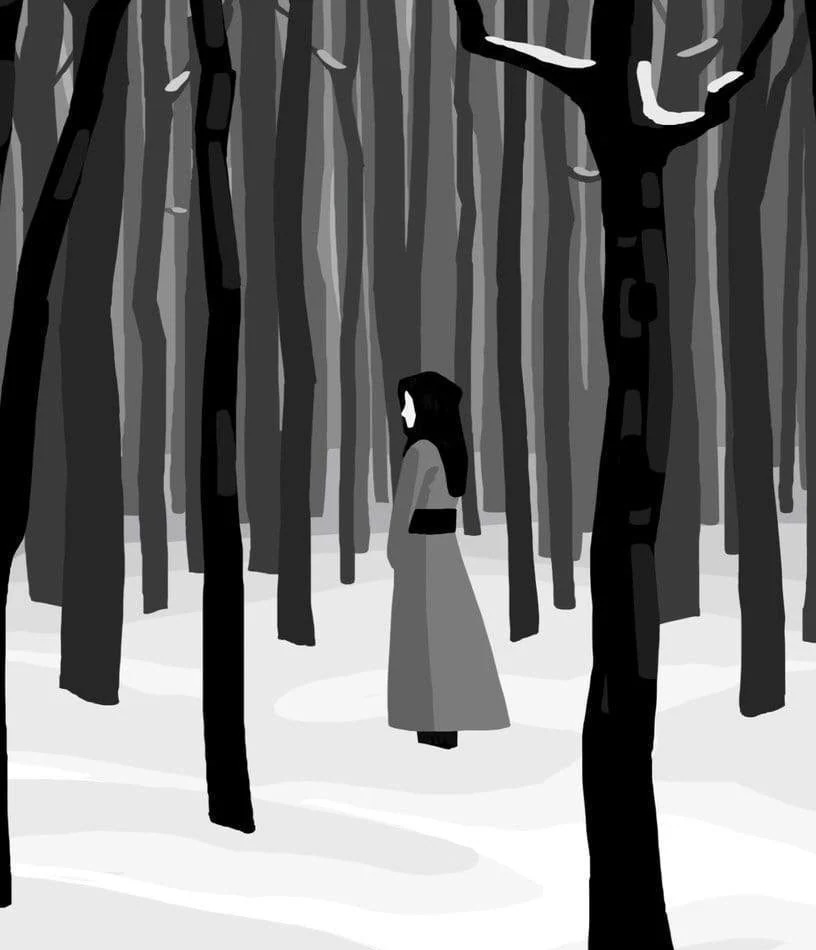
Nothing haunts quite like a Victorian ghost story. There is a sophistication and subliminal quality inherent in the British horror genre. Dracula, Mr. Hyde, the Invisible Man...and, of course, Frankenstein. The American monsters are brash, bold, and seemingly indiscriminate in their destruction: chainsaw-wielding cretons and swamp-dwelling clowns rampage through the streets and wreak havoc on the unsuspecting residents of Small Town, USA. Even a girl dripping with the blood of an innocent pig quite literally upends an entire community with her wrath. But across the pond, British writers have been the ruling class in Gothic literature. Their specters are born of universal internal conflict, fears that one can feel but not quite see in their entirety, the true "bumps in the night" that reveal themselves to be none other than actualized versions of the demons terrorizing society. From where do these stoic beasts originate, if not in the minds and hearts of the people themselves? Don't worry, they seem to say. Your worst nightmares are true.

Mary Shelley is probably one of the most mercurial and fascinating writers of her time. Her life was a constant reflection of the darkly ironic and twisted sensibilities of the genre in which she has conjured nearly immortal fame. Losing her virginity on her mother's grave? Check. Murder rumors surrounding the death of her lover's wife? Check. Carrying around your dead husband's calcified heart? Check. She stated that her inspiration for Frankenstein was a lucid dream in which she saw a maddened scientist kneeling by a re-animated corpse.

Right. Check and check.

But really, who else could have written such an enduring myth? Only a teenage girl, albeit one with incredible talent and intelligence, could have dreamt up a story about a crazed and self-righteous chemist becoming involved in the re-assembling of the deceased for the purpose of alchemical experiments. Only Shelley could have herself constructed a book that artfully cobbles together critiques of scientific abuses, male ego, unfounded prejudice, and revenge, all while essentially pioneering the idea of crossing horror with science fiction, an as yet unplumbed genre. Frankenstein unearths the monster within, and perhaps the most terrifying fact it teaches is that one cannot separate oneself from that internal fiend.


1. "Those were the last moments of my life during which I enjoyed the feeling of happiness" (177).

The drama. Victor Frankenstein is sort of like Jack Black's character in the re-imagined Jumanji--a teenage girl trapped in the body of a grown man. He is moody and obsessive, isolates himself from family and friends for long periods of time, romanticizes the fictional, blames others for the problems of his own creation...and we love him for it. The wonderful thing about the novel is that it creates a world in which his surroundings match the dramatizations of his soul. Every event happens exactly how it must in order to create a sense of mourning over the tragic destruction of nearly perfect beauty. Victor succeeds in re-animating a corpse which longs only to please its creator, but their relationship is forever destroyed by Victor's fear, selfishness, and warped savior complex. Each character, man and beast, loses his beloved at the unmerciful hand of the other. The monster lingers in the shadows of a stormy night, lures Victor to blustery mountaintops for a keen warning, and then escapes into the Tundra on a dogsled, of all things. Frankenstein captures the imagination by embodying the dramatic underpinnings that have enabled the longevity of gothic horror.


2. "Slave, I before reasoned with you, but you have proved yourself unworthy of my condescension. Remember that I have power; you believe yourself miserable, but I can make you so wretched that the light of day will be hateful to you. You are my creator, but I am your master--obey!" (153).

Subverted expectation and social commentary. One cannot have a conversation about Frankenstein without discussing the innate critiques of society present in the writing. The true monster is, of course, Victor Frankenstein himself, not the creature who has (ironically) taken his name in modern day. Victor feverishly constructs his own worst nightmare and then proceeds to deny it of any human rights: food, shelter, clothing, and community. The brilliance of these British horror novels is that the physical manifestation of fear is, while fairly terrifying in its own right, only a front for the real villain. Greed, lust for power, abuse of authority, selfishness, pride, unfettered conquest, you name it. This quality makes it impossible for readers to lie peacefully in bed at night, comforting themselves with the thought that "it was all made up." Is the true monster something on the inside, something all around, something subversive, something impossible to destroy with a physical weapon of war? Are we doomed to forever fight that which is part of humanity? In that case, we might wish for an animal more easily slain. Haunting, isn't it?


3. "These wonderful narrations inspired me with strange feelings. Was man, indeed, at once so powerful, so virtuous, and magnificent, yet so vicious and base? He appeared at one time a mere scion of the evil principle, and at another as all that can be conceived as noble and godlike" (107).

Literary quality. For me, Frankenstein walks the line between containing gorgeous, marginally archaic language and still being reasonably readable. There are classics that I like, but I would not read again. They are certainly worth the trouble the first time around, but I can't exactly sink into the stories and lose myself in them. Frankenstein is a re-reader. It's one to which I return, because the experience is not tainted by having to trip over lengthy prose and indiscernible syntax.


I am a step away from adding this novel to my British Literature course. Read it for yourself and unironically enjoy one of the classics. 

Thursday, December 12, 2024

The Bell Jar


"I wondered why I couldn't go the whole way doing what I should any more. This made me sad and tired. Then I wondered why I couldn't go the whole way doing what I shouldn't...and this made me even sadder and more tired" (18).


Having read much of Sylvia Plath's poetry, this year felt like the right moment to finally interact with her one and only novel, The Bell Jar. There is a part of me that wishes I had read it as a teenager, or at the very least in my early 20s, in order to compare my current thoughts to the response I might have had as a younger woman. When a book infiltrates one's dreams, its impact is evident. The few nights that I read a few chapters before bed and the taste of them lingered in feverish nightmares. I was relieved when I finally reached the end. It is difficult to slog through the inner workings of an emotional breakdown and navigate the twisted thoughts of a person caught in the throes of mental illness. Few authors have undertaken such a risky and unnerving task, and Plath's tragic legacy only add to the solemnity that descended upon me during my journey through the book.

There is some literature that can be liked or disliked, others that can only be accepted and respected for what they are, in spite of our emotional responses to them. I believe this text to be one of the second category. Can anyone truly like interacting with the brokenness of internal struggle and sickness? Perhaps we see ourselves in the characters, or maybe others with whom we have interacted. A lucky few may have had little to no contact with any psychological disorders, and these readers could entirely miss the accuracy in Plath's presentation of disordered thinking. Whatever our response to her work, no one can debate that she knew quite intimately the subject matter on which she chose to write. Such skill came at the highest cost, and her honesty haunts each new generation of readers.


1. "They hung the raw, red screen of their tiny vessels in front of my face like a wound" (82).

Literary artistry. Plath has mastered that form of figurative language that I consider as walking the line between inevitability and surprise. The descriptions cut to the truth of human experience--they feel so true that it almost shocks the reader into contemplating why they hadn't thought of it that before. Simultaneously, the comparisons are fresh. They don't remind one of any other text. Artists are always influenced by other artists, but Plath manages to bury her influences so deeply that each passage shines with the crystal clarity of originality. I think at once, Ah, of course, that is the feeling! and, Well, I have never thought of that before.


2. "...babies doing all the little tricky things it takes to grow up, step by step, into an anxious world" (153).

Accurate portrayal of mental illness...positives. The accuracy in Esther's decent into madness and depression, and her struggle to dig out of the darkness and back to a functioning life, is unmistakable. Especially for a woman of the mid-twentieth century--wherein women who displayed excessive emotion in any direction would be considered unstable and hysterical--recording the experience of mental and emotional disintegration is important. Many who have had similar struggles may feel seen and understood, and those who have not may take time to understand that which is outside of their realm of experience.


3. "I felt myself melting into the shadows like the negative of a person I'd never seen before in my life" (6).

Accurate portrayal of mental illness...negatives. The problem with delving into a broken mind is that madness can be catching. I have already mentioned that this book was not an easy read for me, as the nightmarish cast of Esther's plunge into self-flagellation and harm began to manipulate my own way of thinking. A consistent aspect of mental illness is the selfishness that encapsulates the person who is suffocated by their own internal contortion. The internal becomes all-encompassing, even as external forces are blamed as the causal factors for one's agony. Esther views her life as a failure, but she ultimately believes herself to be a victim of the choices that others have made. Her boss, her friends, her parents, her lovers, her counselors and doctors...they have all compromised her in some way, forced her into the shape of a monster that will ultimately destroy every good aspect of her life. While this characteristic may be important to identify, it is imperative that a person does not dwell on such duplicitous thinking for long. We are all prone to selfishness and faulty introspection anyway, and such constant reminders cannot be healthy.


Tread with care if you choose to undertake this read. It is an important work but may not be appropriate for every mind.

Tuesday, December 10, 2024

And Then There Were None


"It is perfectly clear. Mr. Owen is one of us..." (150).


This novel is the first Agatha Christie that I read. It also happens to be one of her most famous works, adapted time and again into movies, plays, and other mysteries that owe their existence to Christie's influences. What makes the simple recipe of her cliffhangers so addictive? As she wrote, she had not even deciphered the enigmas for herself. Her process was one of writing without thought for how the book would end--she let the mystery run away with itself, as it were. Christie is quoted as saying that she would often change her decision on who the murderer was in the midst of drafting her stories. The simple, stock characters, all with something seemingly sinister to hide, sever the idea of absolution from the ending. Everyone is guilty! The question becomes, who is guilty of this crime? Murders are being committed in increasingly mind-boggling ways, and there is a psychological underpinning that invokes a certain terror as the reader contemplates the meaning of true culpability. However frustrating the process may sound to me, her recipe for a satisfying mystery seems to be working...

I read an article a few months ago about some tourists visiting her home and becoming stranded there during a storm that blocked the only road to her isolated residence. How they felt about being stuck, miles from any civilization, was not recorded in the report--but I couldn't help thinking, This is exactly what she would have wanted. The really interesting aspect of such a real-life occurrence is the simultaneous oddity and predictability of it all. Of course, one of the most famous mystery novel writers of all time would live in a foreboding mansion on the other side of a harrowing, single road. But an unsuspecting group of mystery novel fans being told they are victims of a sudden storm and will be inhabiting this home for an unforeseeable number of hours? A plot twist of astronomically ironic proportions.


1. "Outside the rain poured down and the wind howled in great shuddering gusts against the windowpanes" (167).

The foreshadowing. Agatha Christie's pacing is impeccable. Her revelations of each murder and subsequent descriptions of the guests descending into madness alongside each other extend just long enough to drive the reader to his or her own form of insanity. She manages to reveal the next clue at exactly the right moment, either before or after the reader (or the characters) expect it. I finished this book in two days; the chapters are neither too long nor too short. Christie has defined the perfect framework for a satisfying riddle. 


2. "Mr. Justice Wargrave was sitting in his high-backed chair at the end of the room. Two candles burned on either side of him. But what shocked and startled the onlookers was the fact that he sat there robed in scarlet with a judge's wig upon his head" (222).

The theatricality. There is something to be said about the camp and hyperbole of the mystery genre. The best mysteries are the ones that embrace such drama and use it to their advantage. Imaginations are captured by the enduring commotion of the inscrutable, the strange, and the quizzically outlandish. Christie's descriptions provoke an image: she triggers emotion through the atmosphere of the scene. The balance between subtlety and sensation is where a successful mystery lies.


3. "...writing my confession, enclosing it in a bottle, sealing the latter, and casting it into the waves" (285).

A mystery too subtle? One possible critique is the extremely detailed back story given to explain the motivation for such seemingly passionate bloodlust. It is possible that a serial killer, à la Dexter, kills for psychotic reasoning that is a combination between commonly accepted morals and the need for personal vindication in some form. And Then There Were None is not the story of such a murderer. The architect of this nightmarish scenario may turn out to inhabit that realm, but the book itself does not endeavor to explore such a conscience. Christie focuses on the reactions of the victims as they try to decipher a scheme that is not rooted in common sense. The ending may feel unsatisfying when many of the clues to the identity of the enemy are unknowable outside of the context of his or her personal background.

Monday, December 9, 2024

The Screwtape Letters


"...you must keep him praying to it--to the thing that he has made, not to the Person who has made him" (25).


C.S. Lewis is a name that echoes continually through the labyrinthine annals that constitute the 20th century literary canon. He was a man who wrote for children, for adults, for Christians, and for those less inclined to trust in an omnipotent spiritual figure. The Screwtape Letters perhaps straddles the gaps amongst all of these groups, as it whimsically presents the sinister intentions of two demons plotting for the destruction of an average chap navigating war-torn Britain. The demons function both literally (as Satan's fallen counterparts of ancient times) and figuratively (toying with the emotions, thoughts, and desires of a man's most hidden psychological landscape). The intrepid letters are either cynical satire or a hopeful fight against the subversive manipulative powers that inhabit the domain beyond what we can see. Whatever a reader's response to the novel, its creative conception is undoubtedly the work of a writer deeply in touch with his own personal failings, and to a greater extent, the troubles and temptations that plague each of us. The reader approaches the text hoping to easily point the finger of condemnation at others, but instead, he or she finds the inner workings of their own soul--the personal foul play that human beings are ever attempting to veil and forget. 


1. "...fix his attention inward that he no longer looks beyond himself to see our Enemy or his own neighbors" (35).

Humbling reality. My mother-in-law recently read TSL, and she was horrified by it. Her response could possibly have something to do with reading the text in a language to which she is not native, but I tend to think that perhaps her sensitivity to the spiritual matters may be of a greater influence. Sometimes I catch myself nodding along to the profane wanderings of a demon's mind; the mind finds familiar ground when not actively guarding itself against the book's meditations on the theories of practical temptation. The content itself is rather benign, lacking the sensational elements of great evil, terrifying gore, or even easily identifiable hypocrisy. When "the Patient's" mother is passing undue judgement, it is easy to decide that she is the villain and can reasonably be treated with disdain. But isn't that the point that Lewis is attempting to prove? The work of the devil is to corrupt us, not necessarily to outrageous crimes of passion, but in the less obvious, everyday missteps.

I am much more concerned with a lack of horror when it comes to the personal commentary that I refuse to see. I suffer through many days entrenched in my own victimhood, hypnotized by the perceived cruelties and inconveniences that plague my interactions with those around me. But in reality? I am the one who grits my teeth at the sour taste in my mouth created by my subtle animosity for those around me. The architecture of my mind has convinced me that others have created the problems that, truthfully, can only come from within.


2. "He must have some real reason for creating them and taking so much trouble about them" (112).

The contrast. Hope is found in the truth that pours through the mind like fresh streams of cool water. One of my personal copies of TSL is inscribed with every Scripture that jumped out to me from between the lines of Satanic manipulation. As Jesus in the desert proposed verse after verse to combat the lies of the devil, so have I used this same weapon in my fight against the temptations that strike me where it hurts the most. Satan is clever, and my corruptible humanity is susceptible to the mere suggestion of selfishness. But at the end of the book, when "the Patient" transcends the reach of his demon's grasp, I see the goal of all this striving: freedom from the world's cloying grasp and eternity in the presence of the Savior.


3. "This animal, this thing begotten in a bed, could look on Him. What is blinding, suffocating fire t you, is now cool light to him, is clarity itself, and wears the form of a Man" (186-87).

Heavenly hope. I would be remiss if I did not quote this portion of text. Reading the intellectually challenging moral war of TSL can be just as exhausting as actually living it. However, encountering a description of heaven's arms opening wide to receive the weary Christian is even more poignant when considered from the viewpoint of he who can never again approach that celestial gateway. All of TSL is striking in its literal portrayal of the "devil's advocate," but considering this final triumph from the perspective of a demon's ultimate defeat feeds some desire of the soul. There is a sense of justice fulfilled, safety and serenity absolutely achieved, and humble meditation on the rescue from a flaming plummet into unrestrained damnation.


4. "There are two equal and opposite errors...One is to disbelieve in their existence. The other is to believe, and to feel an excessive and unhealthy interest in them" (xlvii).

Preoccupation. C.S. Lewis says it here, right at the beginning of his text, that such preoccupation with the unknowable evils of the spiritual realm can only result in spiritual sickness. Not acknowledging it at all, however, will result in a similarly negative repercussion. The author himself stated that he would not be writing a sequel to the book, as his time inhabiting the hypothetical mind of a demon had left him bereft in a strange weakness of body and spirit. There is no way, at least on this side of heaven, to know how close these imaginative letters come to the reality of what we face each day on earth. If the after-effects of reading TSL are any indication, I would say that he was supernaturally inspired to write that which is needed for us to soberly self-evaluate our willing participation in our own allurement from the path of righteous living. I agree that after spending annual time in this book, I am glad to leave it behind until the next year. The work of self-evaluation through the lens of other-worldly influences is good, but there is a reason why we are solidly grounded in the physical world.

Monday, August 26, 2024

To Kill a Mockingbird


"It's not necessary to tell all you know...You're not gonna change any of them by talkin...they've got to learn themselves, and when they don't want to learn there's nothing you can do but keep your mouth shut or talk their language" (143).


There were two types of stories that I enjoyed in my late elementary and middle school years: the fantastical fairy tales that carried me away to shining otherworldly realms, and the coming-of-age, fictional memoir. I loved each for differing reasons, but the second category carried a certain attraction that is difficult to unpack. For one, they were often told in first-person POV and created a sense of closeness between the narrator and reader so poignant that it almost conflated the two. While an imaginative story filled with magic and impossibility holds its own appeal, there is something solid and comfortable in the possible. Reading the thoughts of a young girl navigating relationships, education, and the internal narrative of a developing maturity lent credence to the struggles and triumphs I was also experiencing. Others have walked these paths as well, and they conquered them without discovering a hidden ability, traveling to a different dimension, inhabiting a supernatural body with wings or a cape or a horse's lower half.

To Kill a Mockingbird is one of these stories. It tells a tale that is, at least partially, based on the life of its author. She unravels a plot thread that covers the highs and lows, but also the mundane in-between--occurrences that seem unimportant (albeit funny, sad, or touching in some sense), but actually carry symbolic meaning for those who are willing to take the time and meditate upon them. Could our lives also be shaped by such events? Perhaps there are meaningful and important influences happening right in front of us, and we need someone else's story to remind us to keep our eyes open.


1. "If there's just one kind of folks, why can't they get along with each other? If they're all alike, why do they go out of their way to despise each other" (259)?

The questions. To Kill a Mockingbird has existed in a realm of awed historical preservation almost since its publication, as readers felt its importance as a stirring record of the questions that can start a revolution. As the book itself states, it is the innocence of children that often sets such change into motion. Scout and Jem look at their world with fresh eyes, untainted by the complacency of having been overwhelmed by the world's prejudice for too many years. They ask the simplest of questions, draw the most obvious of connections between the behavior of the adults around them and the contradictory tolerance that their southern good manners dictate. For this reason, TKAM has remained an important and scathing look at the human tendency towards convenient cognitive dissonance, staring at readers through the eyes of capacious youth.


2. "...when I asked Atticus about it, he said there were already enough sunbeams in the family and to go on about my business, he didn't mind me much the way I was" (93).

Family and identity. Scout is the narrator of this tale and the forceful heart behind its emotional impact. She is unabashedly herself, climbing the mountains of societal expectation without care or self-doubt. Atticus defends this wild independence, granting her the freedom that comes with the primary male figure in a young girl's life looking at her in approval no matter her perceived failings. Jem has reached a point in adolescence where he must decide if he will adhere to and perpetuate the standards set by the surrounding culture or give these up for redefinition by a new generation. Sometimes he is one and sometimes he is the other, as we often discover to be true of us all. Scout's character, however, juxtaposes this inconsistency. She makes mistakes and blunders her way through the growth of empathy and emotional maturity, but her framework for herself and the world around her stays constant. Her family has provided an environment in which personal identity formation is encouraged.


3. "...the mockingbirds were silent" (108).

The symbolism. The mockingbird is perhaps one of the premier symbols in modern American literature. This novel is almost an allegory at points, breaking into what appear as short parables to extrapolate the importance of the narrative being told. Symbols like this are, of course, an English teachers dream, but they are also invaluable for teaching concepts that elude many adults. Children understand the world through images, not words. They see most clearly what language has perhaps dimmed for those of us more mature in years--the applicable nature of the everyday occurrence. Two young children watch their bookish, lawyer father take up a rifle and shoot the diseased dog, dumb to his actions, weaving his way toward the people he would take with him on his path to ultimate doom. The canker of the town's racism festers unchecked in a humid courtroom. A group of neighbors, looking each other in the eyes, are able to pull the trigger backwards and shoot themselves in the name of perverted justice. Such stories leave a scar upon our hearts, refusing to go numb, so that the events that should impact us as though we had never seen the evil in this world in fact still do.

Thursday, July 18, 2024

Great Expectations


"Out of my thoughts! You are part of my existence, part of myself. You have been in every line I have ever read since I first came here, the rough common boy whose poor heart you wounded even then" (272).


I first read an abridged version of Great Expectations as a middle school student, and what I remember most readily are the feelings that the prose invoked. There was something tragically romantic about the macabre living tomb of Satis House. Flames licked at its cobweb-bedecked corners and the smoky mirage rose like a specter before my eyes, drawing me into the contrasting worlds of England's jaded social elite and the misty moors of rural poverty. Reading the novel in its entirety further cemented my infatuation with Dickens' starkly illustrated worlds. Each setting's clarity of purpose actualized it in my mind as though I could see the shadows of such places, all around me, within the physical world.

My first night in London, nearly a decade later, I stepped out of the airport and imagined that the streets were fairly melting from the pages I'd read years before. Glowing streetlamps cast their yellow pallor upon rain-streaked cobblestone, leaving the buildings in shadow against the navy sky. Every ancient corner held echoes of living history, from Roman occupancy to modern existence. That image may have been a result of the jetlag, but the impression has stayed with me. All the elements that craft a story stand out with exactitude in a Dickens novel: the emotionally rich characters are placed in startlingly vivid settings, and they interact with veracity through the whole spectrum of relational and circumstantial potentiality.


1. "Miss Havisham's house, which was of old brick, and dismal, and had a great many iron bars to it. Some of the windows had been walled up; of those that remained, all the lower were rustily barred" (48).

Setting. The setting is what first drew me to Dickens. Each tableau characterizes the lives of its inhabitants--innocent Pip lives in the bleak and windswept moors, describing the graves of his parents as his most formative memory. The impactful moment of change for him arrives in the form of the formidable shadow of Miss Havisham's crumbling edifice. He falls hopelessly (and I do mean hopelessly) in love with the beautiful, cold Estella, and seeks a doomed sentimental connection with her as he trades his humble familial allegiances for bustling London streets. The depressed and lackadaisical members of the city's elite care only for appearances, and they envelop Pip into their world begrudgingly. Each of these locales is utilized to its full extent and takes on the qualities of a character in its own right.


2. "These people hated me with the hatred of cupidity and disappointment. As a matter of course, they fawned upon me in my prosperity with the basest meanness" (159).

Character. Some of the individuals who populate Dickens novels are stereotypes in the sense that they evoke certain qualitative elements within the setting they populate. The aggregate of wealthy and self-absorbed family members lounging in Miss Havisham's mansion treat Pip with a contempt that he finds matched in the forbearance of his own sister and the townspeople of his childhood home. The difference in financial status may provide interesting contrasts, but ultimately, meanspirited and selfish people are found in every social stratum. Miss Havisham and Estella are an odd pair, one overwhelmed by anger and hurt to the point of absurdity, the other raised to feel nothing whatsoever. Herbert Pocket, the loyal and amiable friend, good-naturedly partners with Pip through all of his myriad troubles and joys. Dear Joe, the beating heart of Pip's story, provides a stalwart home to which he can (and does) return. The characters are human, full of faults and quirks and relatable nonsense that mirrors and enhances the world around us.


3. "After so many years, it is strange that we should thus meet again, Estella, here where our first meeting was! Do you often come back" (357)?

Plot. To avoid any spoilers, I will not unpack all of the revealed connections amongst the characters. Suffice it to say, I have a diagram drawn in the front cover of my copy that has lines of connection tracing each character's relationship to the others. These interactions are unfolded slowly, as time goes on and long-held secrets are revealed. Pip eventually pieces together the identity of his benefactor and the villains who pursue them both, Estella's biological parentage, and his own unlikely part in all of their stories. He is the protagonist and narrator, but the true drama of the plot really takes place around him as he becomes involved through a series of happenstances. What a world! The main character is himself somewhat of a side character in his own story. Pip does not take a backseat to all that occurs, but rather goes through a journey of growth that shows both his moral failings and ultimate development of maturity.


My only criticism is, with all personal consistency, that many of the descriptions of characters and daily goings-on can continue for what seems like an exhausting number of pages. Perhaps this response is the fault of the reader alone; 21st century consumers have certainly been trained into shorter attention spans and degraded tolerance (much less enjoyment) of any media that does not present only the most immediate and relevant information. Hold this opinion against me and not Dickens, as his novel is a beautifully constructed coming-of-age story with characters that will live in your heart and mind beyond the time you sit with them.

Saturday, June 29, 2024

Adventures of Huckleberry Finn


"Right is right, and wrong is wrong, and a body ain't got no business doing wrong when he ain't ignorant and knows better" (355).


Huckleberry Finn and Tom Sawyer are the models for boyhood camaraderie and unhindered adventure. When I teach this novel, the male side of the class usually relates to the characters and story with ready approval. The girls, however, sometimes feel as though they've entered a fever dream where there are no rules and no comforting securities. I think that this response tells us something about the differences between men and women, but also about the success that Samuel Clemens (known by his pen name, Mark Twain) had in writing for a certain audience. My frustrated and sometimes horrified response to the material is exactly how I feel when hearing my brother relay stories about his daily interactions and choices. So, while I'm taking a deep breath in between chapters, I am also struck by the authenticity that Clemens was able to infuse with his storytelling. For this reason, and many others, I give you many a reason to pick up Adventures of Huckleberry Finn, whether you are the intended audience or not:  


1. "We said their warn't no home like a raft, after all...You feel mighty free and easy and comfortable on a raft" (256).

The boyish simplicity. Samuel Clemens is a master of the childhood adventure novel. He writes like a boy whose mother had her hands full, and in fact she is quoted saying as much about the prolific author. He creates madcap scenarios for his characters to navigate, and they do so with a nonchalance that provides an ironic underpinning to the whole ordeal. Huck's self-awareness is marked by polar opposites: He will realize truths that no one else in the text seems to understand, but yet he happily goes along with whatever wild enterprise he or his friends dream up. If I had no prior awareness of the book, how would I know the appeal of this novel to the inner boy in every young man? My feminine horror at almost every page turn. The unpredictable setting along the Mississippi River, each ridiculous disagreement and misuse of common words, and the unnecessarily complicated, hairbrained schemes of Tom, Huck, and Jim...This book is exhausting! I consistently find myself wanting to mother all three of them. I'm guessing that this is the effect that Twain was going for.


2. "He was thinking about his wife and children away up yonder, and he was low and homesick...I do believe he cared just as much for his people as white folks does for ther'n" (286).

The recognition of mutual humanity. Huck Finn was such an important work for its time, and it still remains so today. The simplicity in Huck's journey as he grows in friendship with Jim, the only true father figure in his life, is a beautiful testament to the unnatural bigotry of racism. Many of Huck's direct influences tell him that skin color categorizes and alienates. Independent of the society that establishes these ideas, he conceives very quickly of the comparative humanity in Jim. They are the same in all essential aspects. An even greater testament to this realization is the fact that Huck continues, for a time, to believe that it is a moral wrong to protect and help Jim. Yet, he still does so out of loyalty to his friend and belief in his individualism. The most powerful tool against hatred and isolation is relationship, and Twain communicates the empathy between Huck and Jim with great poignance.


3. "Jim said bees wouldn't sting idiots; but I didn't believe that, because I had tried them lots of times myself, and they wouldn't sting me" (202).

The humor. This point is obvious and almost doesn't need to be made, but for the sake of fastidiousness, I will cover it nonetheless. Situational irony abounds. Twain often plays on the reader's awareness of what the characters seem not to know. The well-rounded emotional impact of the novel is both lighthearted and occasionally serious--Huck Finn is a well-balance novel with all of the personality and depth of a real boyhood coming-of-age. 


One critique--the length. I will fully acknowledge my bias in this area, as I often feel that books, movies, and even songs can go on for too long. There is a lot of fluff and nonsense (primarily coming from Tom as he crafts convoluted rescue plans that really only need a chapter to convey) that make re-reading it somewhat of a chore. I am not probably the audience that Twain imagined, and so I would not hesitate to recommend the book to anyone who desires a look into the mind of a young and hapless teenage boy growing up in a pre-Civil War America.

Wednesday, June 19, 2024

Strong Poison


"There were crimson roses on the bench; they looked like splashes of blood" (1).


I can remember the day that I first heard the name Dorothy L. Sayers. I was in a mall, of all places, speaking on the phone with my thesis advisor. I had told her that I wanted to focus on a British author who wrote in a multitude of genres on Christian themes. Of course, C.S. Lewis was out of the question, as he is essentially the Shakespeare of contemporary Christian literature; much has been written on him, and it is difficult to find a unique perspective to add to the scholarship already available on his work. I was stuck in a pickle, or so I thought. I was prepared to compromise, as I assumed that my requirements were much too narrow.

My advisor recommended that I research Sayers, and thus began a newfound love affair with a writer who transcended my list of preferences. She was perfect--witty and intelligent, with a mysterious past and talent in any number of written forms. I spent the better part of two years learning all that I could, consuming her novels, plays, poetry, apologetics essays, and letters. It may be shocking, but my introduction will need to end at this juncture. If I were to attempt to write another paragraph, I would just as soon blather for upwards of 80 pages. (But I've already done that task in the form of my thesis, which is enough material for 40 blog posts, and so here I will be brief.) Without further ado: Strong Poison, my friends...


1. "I didn't guess the murderer till page 200, rather clever, because I usually do it about page 15. So very curious to write books about crimes and then be accused of a crime one's self" (27).

The mystery. Sayers is the sort of clever mystery writer who gives just enough information to make the reader feel that he or she is along for the ride, but not so much that the ending is revealed before its due time. Unlike other detective novels, such as Sherlock Holmes, the revelations are not so highbrow as to alienate the reader from the process. On the other hand, she writes with clear purpose, not the chaos that can accompany someone such as Agatha Christie, who adjusted the culprit even in the process of writing so as to throw one off the scent.

The autobiographical nature of this novel, written about a female mystery writer, gives the piece a personal feeling. There is a commitment to the tropes that keep fans returning to the genre, but not to the extent that it becomes turgid with cliche. While the perpetrator of the crime may become increasingly more obvious as the investigation unfolds, the means and motive remain hidden and cast doubt on the reader's analysis of the crime.


2. "What I mean to say is, when all this is over, I want to marry you, if you can put up with me and all that" (39).

The relationships. Strong Poison is rather far along in the series, but I chose it because it is a pivotal point in the relationship between Wimsey and Vane. Some critics have complained that Sayers seems to have fallen in love with her main character and placed herself in the novel to live out her own fantasy, but I tend to agree with C.S. Lewis' evaluation: Sayers allows Peter to grow up. His charming English mannerisms and romantic bachelor lifestyle serve him well in earlier iterations, but there is a turning point for him upon meeting a woman who is his match in both gumption and inner conflict. There is complexity in their relationship, even from the beginning, and they are allowed to be human with one another.

Their dialogue, the commitment that Peter Wimsey shows to Harriet even as she denies him access to her heart, and the magnetic attraction between such colorful and well-fleshed characters adds to the emotional impact of the story. Sayers has brought a personal aspect into a mystery novel and intrigue into a romantic novel--she straddles these two genres and manages to create something entirely new.


3. "Philip, who loved beauty so much--do you think he would have chosen arsenic?--the suburban poisoner's outfit? That's absolutely impossible" (77).

The cultural commentary. Some of the themes prevalent in many of her works are that of class, gender, and societal expectations. Sayers provides her characters with honest, sometimes humorous, and often thought-provoking qualities, displaying truths about human nature alongside an apt social analysis. In this book, we see the world of early 20th century bohemian artists clashing with the posh and propriety of the British elite. From courtrooms and estates to dark house parties with questionable moral conduct, she does not shy away from presenting these worlds with unflinching realism and a touch of sly wit. 

Harriet herself is accused of committing a crime that seems to fit exactly with her lifestyle and moral choices, but yet she speaks with honesty on her own failings rather than defensiveness. She has resigned herself to the court of public opinion, even as those who love her are privy to her more unexpected qualities. Peter calls on his myriad friends to assist him in the urgent quest to rescue and redeem Harriet's good name, and the women and men who loyally respond to his call are varied in every way. Maybe this meditation comes from my interactions with many of Sayers' other works, but I tend to see this inclusion of a diverse set of characters as an attempt to portray both the good and the not so good present in every social stratum. We are all human, right? We know that things are not always as they seem, and yet we fall into stereotypes because they are comfortable modes of operation. One thing that Sayers always does well is wry complexity. She calls them like she sees them, for better or worse, and never turns away from a seeming contradiction.

Have I done this novel its rightful service? Most likely not. But there are a dozen others, so perhaps I just need some practice. Read along with me, and we shall see Sayers' great Wimsey saga unfold together!

Saturday, June 8, 2024

Till We Have Faces


"Do you think it all meant nothing, all the longing? The longing for home? For indeed it now feels not like going, but like going back," (87).


Some of my earliest memories have no images, only sound and feeling. Lying on the floor with my eyes close, listening to the sound of my father's voice, I would be lost in the world of Narnia--the swirling sand of Calormen beneath my feet and Cair Paravel rising in the distance. Before I could read much more than a picture book on my own, I found myself well-acquainted with the mystical creatures of C.S. Lewis' imagination. This specific memory contains remnants of The Horse and His Boy, as Shasta and Bree climbed endless dunes under a burning sun to reach freedom. Before I had re-read the books for myself as an older adolescent, I could recall those written descriptions in the voice of my father.

I also grew up on the 1988 BBC version of The Lion, The Witch, and The Wardrobe. It was in 2 parts, and I can see explicitly the scene in the woods, Lucy gaping at the snow melting from budding branches. And then the tape ends. And we had to re-wind before pulling that one out of the VHS player and popping in Part 2. We were front and center in the theater when the new version was released in 2005, and there was no more re-winding necessary, thankfully.

As a teenager, I made a list of every piece of C.S. Lewis writing that I could find. I decided that I would work my way through, book by book, until I had collected them all. I've lost count at this point, but I believe I am somewhere near the 25 mark, with several more still to go. C.S. Lewis' writing has shaped who I am, from childhood until now. This claim is one that can probably be made by many a reader. He wrote the sort of books he would have wanted to read, and it turns out that what is good reading material doesn't alter all that much, even as the outside trappings of our societies change beyond recognition. I'm guessing he understood that fact better than most.

My most recent addition to my Lewis library I is Till We Have Faces. It is the last book that he wrote and published before his death; he is quoted as saying that it his best. This review is difficult for me to write, not because I don't have thoughts, but because the thoughts are too broad. I think too much, too many things, concerning this book, and I fear that a few bullet points cannot do it justice. But that is the task that I have set before myself, and so I will attempt to craft a description that will do some small semblance of justice to the text. If nothing else, perhaps it will encourage you to pick it up and read for yourself:


1. "There stood the palace, grey--as all things were grey in that hour and place--but solid and motionless, wall within wall, pillar and arch and architrave, acres of it, a labyrinthine beauty" (149).

The fantasy. I loved the fantasy genre when I was a kid, and now that I've stepped back into that realm, I am recalling what originally drew me to it. C.S. Lewis does the fantastical and magical better than almost anyone, and I believe part of his longevity as a beloved author is his willingness to present the subtle humanity of imagination through the eyes of children. What if the trees could hear and remain loyal to the rightful heirs of the throne? What if a goat was also half-human and drank tea in his cave-like home? And what if a young, arrogant boy could fall prey to an evil witch, but his very own siblings took up the mantle and fought for the freedom of an entire country? And...what if Father Christmas was there? These are the types of dreams that we all have, but often only children are brave enough to speak them. The fairytales are only one step away from our world, with battles and simple kindnesses and the same human tendencies we see every day. However, they are also full of all the wonder that can be infused with the question, what if?

C.S. Lewis got this aspect of fantasy right, and he does it yet again in Till We Have Faces. A medievalist will always do castles and monsters right, and a Greek mythologist knows his gods and allegories like no one else. Lewis brings all of these influences into his work. As I was reading, I couldn't help but think that this work is the precursor to every modern fantasy book that I have enjoyed. There are the very real, physical dangers of wars and plagues, but the spiritual and metaphysical terrors are also ever-present. Of course, the greatest monster is always the unseen. The soaring beauty and the tragic ugliness of such a world, where all is possible and dreams or nightmares both lurk at the door, is what fantasy readers seek.


2. "What began the change was the very writing itself. Let no one lightly set about such a work. Memory, once waked, will play the tyrant" (287).

The voice. The novel is written as a journaling task by our main character, Orual. She has set out to tell her tale, to revisit the events that led her to the great plight in which she now finds herself. We grow with Orual, learning to see the world through her eyes and finding the errors in her thinking. She cannot identify them herself, at least in the beginning. Letting a first-person narrator express her own flaws without realization, essentially incriminating herself without knowing it, is incredibly subversive. We, as the readers, are one with her: we are inside Orual's mind and can only see the world through her eyes. Somehow, we are led to both empathize with her desperation and simultaneously condemn her for pride and self-imposed blindness. There is a many a book wherein the author crafts a protagonist that is lacking, who is unlikable or annoying or selfish, to the point where the book is ruined. Not so with Orual. She is, for lack of a better description, human. Her entire journey to a discovery of the truth mirrors the reader's own. If she misses the mark so clearly, then what am I missing within the annals of my own mind? Have I looked in the mirror too long and forgotten what is there? Lewis thus points us inward through the coaxing thoughts of another.


3. "That ruinous face was mine. I was that...swollen spider, squat at its centre, gorged with men's stolen lives...ceasing to be...was now too hard for me" (315).

The allegory. Lewis' scholarly focus was on the allegorical work of the Middle Ages, so of course he is a master in the form. He weaves the idea of a pagan pantheon together with clearly Christian themes. How does he manage such a feat? And is it one worth doing? In his view, all of the ancient myths and stories had their roots in the one great story of humanity: God, sending His Son to die on our behalf and drawing us back into community with Himself after our violent rejection of Him. Every mythology and religion carry the same spiritual elements, just packaged slightly differently to fit the culture. The humans in Till We Have Faces shape gods who are convenient to them. The cruel and brutal Ungit resides in a dark house in the form of a misshapen stone, requiring bloody sacrifice and withholding mercy from the people. The god on the mountain, unseen and mysterious, is imagined by some as a brute and by others as majestic and beautiful.

At one point in the novel, the priest of Ungit describes the gods as being the source and the result of one another. "[S]he signifies the earth, which is the womb and mother of all living things" and the god on the mountain is "the sky by its showers [making] the earth fruitful" (308). The people are very vague and contradictory in their theology, proving that none of them really see the truth in full, only in part. They have created gods who will suit them and explain the inexplicable, and the gods have produced in them a certain way of living that promotes unity, survival, and moral character. The actuality of their deity has very little importance, in the way that the Israelite's golden calf was not really meant to replace the omnipotent God meeting with Moses on the mountain. Down below, where nothing can be seen except the whispers of sovereign design, the human mind is apt to define everything satisfyingly within the confines of human understanding--even that which cannot be grasped.

The complexity of the allegory is hard to overstate. C.S. Lewis is, on the one hand, commenting on the reality of human nature. He is also showing the true homeliness of our "faces" when compared with the untamed holiness of the true God. We are dust...such small and inconsequential beasts in the face of the One Moses could only see from behind. The wonder is in the fact that we, merely human, will one day see Him face to face as we stand upon the merciful blood of His Son, to be reunited with Him whose image we bear imprinted on our eternal souls. And that, in C.S. Lewis' allegory, is what it means to have a face.

There is no doubt in my mind that you should read Till We Have Faces. If not, I will read it again for both of us. And that is not a threat, but a promise!


Tuesday, June 4, 2024

The Scarlet Letter


"Wondrous strength and generosity of a woman's heart! She will not speak!" (59)


The Scarlet Letter is another novel that I recall from my early high school experience. What I specifically remember about my introduction to the text was the scandalous nature of its plot concerning a woman who had committed adultery...I was at once appalled and fascinated. I don't particularly remember how old I was upon being assigned the book, but I was young enough to be relatively ill acquainted with most content pertaining to such actions. I did, however, love a good forbidden romance. Imagine my disappointment when I realized that the book begins after the romance bit has taken place, and the reader isn't permitted to observe the two lovers interact until about 75% of the way through. So, NOT a romance. Let me just clarify that fact for anyone unsure of the story you will find herein.

I would probably have said, up until a recent point in life, that The Scarlet Letter has historically remained one of my least favorite classics. As a teacher, I've presented it as necessary within courses of American Lit, but with nowhere near the enjoyment I find in most other novels. My earliest memories of the thing are poor, and it hadn't really redeemed itself upon subsequent readings. Now you may be asking, "Dear lady, what has changed? What mysterious providence led you to a newfound love of this work?"

To which I answer, not much. Not much has changed. I am severely sorry to dash your hopes in such a rude fashion; if you were anticipating a rousing treatise in appreciation of Hawthorne's merits, it will not be found here. I will tell you that I started my summer by re-reading TSL--partly because I want to believe in the validity of the classic and would gladly admit, if possible, that the error lies with the reader, but also partially to vindicate my generally harsh critique. I'm sure I looked very studious and "literary" to the casual observer. But there at the end...I must be transparent. I skimmed a little. I just couldn't read Hester's inner turmoil one more time. We get it; the central conflict is within her. She fights against herself, the expectations of her society, the dark emblem upon her chest. I really would like to see the characters do more than sit and think, stand and talk, walk and think and talk. Except for Pearl, who is allowed to run a bit and tromp through water. Usually while talking. And the number of exclamation points! In the last chapter! Is enough to make a high school English teacher blush (with rage)! Shouldn't the emotional climax of the text speak for itself, rather than requiring punctuation to communicate that we have reached the fullness of plot intensity?


Now, to give credit where credit may be due: from the standpoint of characterization and a thought-provoking portrayal of Puritan societal pressures, I can see the value in the text. It is also a really wonderful study on characters. Teaching character analysis and symbolism is pretty easy when a book is primarily characters and symbols, without much distracting plot to speak of. While there is usefulness in it, I still struggle with appreciating The Scarlet Letter as anything more than a tool for the classroom. There are so much more exciting and well-written texts than this one.

In typical form, we find a list of the "Why?":


1. "Then, what was he? -- a substance? -- or the dimmest of all shadows? He longed to speak out...I, your pastor, whom you so reverence and trust, am utterly a pollution and a lie! (119)

The character analysis. As good a place to start as any, Hawthorne's characters are the major substance of his text. We have whole chapters given to waxing poetic about almost every important individual living in New England. While I have my reservations about this mode of writing a novel, I do appreciate the depth with which he evaluates the physical and psychological morphology of Hester, Dimmesdale, Pearl, and Chillingworth. I can stand before a class of students and ask, "How is Dimmesdale's internal unraveling portrayed?" If they've read chapters seven-twelve, the answer will be evident, as it is written no fewer than twenty times. I love this as a method to determine right away which students need habitual public shaming as motivation for reading the assigned texts. If I've interpreted TSL correctly, I believe they will respond by liking it and coming back for more.


2. "The boughs were tossing heavily above their heads; while one solemn old tree groaned dolefully to another, as if telling the sad story of the pair that sat beneath, or constrained to forebode evil to come," (162). 

The language. Over and above the repetitive prose, which I will address shortly, the figurative language in the novel is beautifully executed. There are many descriptions and revelations, especially pertaining to the setting, that strike the reader. A characteristic of many 19th century publications, narrative and exposition often carry the qualities of romantic poetry. Perhaps, rather than writing novels, Hawthorne should have focused on landscape verse. He really would have excelled.


And, in less typical form, a list of the "Why not?":


1. "The mother herself--as if the red ignominy were do deeply scorched into her brain, that all her conceptions assumed its form--had carefully wrought out the similitude; lavishing many hours of morbid ingenuity, to create an analogy between the object of her affection and the emblem of her guilt and torture," (84). 

The pace. There is an interesting viewpoint in writing about the aftermath of a passionate love affair, but the character work that is done sometimes feels hollow when the reader has no real connection to the relationship that set it all in motion. Pearl's father is slowly revealed over the course of a few chapters, which is not my issue. The plot points are so few and far between, they could be listed in a meager number of bullet points; internal struggle is the main impetus for the book's movement. By the time that Hester and her ex-lover meet in the forest and finally acknowledge their still-burning passion for one another, the reader hasn't been set up to care. In short, it took too long. And yet, not enough happened in all of the novel to create a likely scenario where such an admission would make sense. They each battle the sin that was committed, not their hidden love. I waver between thinking that either they are both infuriating and deserve each other, or it would really be better for everyone if they just continued to struggle in private and left one another alone.


2. "The links that united her to the rest of human kind--links of flowers, or silk, or gold, or whatever the material--had all been broken. Here was the iron link of mutual crime, which neither he nor she could break," (132).

The repetition. I've already mentioned this point, but to be clear and ensure that every reader understands, Hester has sinned against the natural order. She is shunned by society. Her struggle is profound, symbolized by the wayward child born of her illicit union. This story does not change until, in the thirteenth chapter, we get "Another View of Hester," which is that... she has sinned against the natural order. She is shunned by society. Her struggle is profound, symbolized by the wayward child born of her illicit union. AND she also still cares for her father's daughter and seeks to protect him. For lack of a more highbrow way to write it, TSL is so boring. You could cut out about half of the chapters and not miss much of anything important.

Harsh, I know. In regard to a recommendation, I would say that The Scarlet Letter may have value from an educational standpoint, but I would be happy to never read or teach this book again. I'd love to speak to someone who likes it (not appreciates or understands it, but LIKES it), because that point of view is beyond the grasp of my mental faculties. 

Friday, May 24, 2024

A Raisin in the Sun


"They spirited alright, my children. Got to admit they got spirit...Like this little plant that ain't never had enough sunshine or nothing - and look at it" (43).


I owe yet another positive experience with a classic to one of the professors who guided me through my Master's. The course was Dramatic Literature, and I registered for it because the class that I actually wanted to take wasn't being offered that semester, and I only needed one more elective to graduate. One might say that my participation was, if not reluctant, at least passively resigned to competently finish the assignments before me and move on to thesis work. Completely outside of my expectation, I did, in fact, end up analyzing a series of plays for a portion of my thesis. I suppose God organizes our lives with a continuity that human foresight lacks.

The theme of the class was: family relationships in dramatic literature. My high school and undergraduate educations were somewhat lacking in exposure to any plays other than Shakespeare, and so most of the subject matter was new to me. A Raisin in the Sun was one of these. While not my favorite play, it is one to which I returned, as the stark characterization of family life is resonant with the contradictions of the everyday. It is a quiet play, set in a singular location, without much shocking plot work. Anyone looking for the sort of excitement or scandal required to keep the attention of many a modern theatre attendee will not find it here. The importance in what Lorraine Hansberry accomplished is in her subtle and straightforward insistence on displaying what each family experiences in its own way, without ringing bells or unexpected twists. Whatever a reader's familial origins may be, this play will touch on some aspect of what it means to be together with the people who understand one another, simultaneously, for the best and for the worst.

Why should you sit awhile with this inconspicuous text?


1. "You see, Mr. Asagai, I am looking for my identity!" (51)

The characters. Each member of the Younger family portrays an important role consistent with the successes, failures, and challenges of the average working-class American. Beneatha, the younger daughter, searches for her identity; she is a young black woman struggling to break free of what she perceives as the oppressive restrictions of previous generations while simultaneously connecting with her African heritage. Walter desires nothing more than to be a man as society defines manhood. Unfortunately, he does not have the maturity or freedom within his mother's home to take control of his family's direction and solely provide for them. Even George, a side character who is an occasional date for Beneatha, functions as a picture of the shallow carelessness of a young man seeking a pretty girl without too many challenging thoughts in her head. Everyone involved in the story plays their role to perfection, and from within the archetypes rise complexities that are familiar to anyone struggling through the daily messes of life.


2. "Son - you - you understand what I done, don't you? I - I just seen my family falling apart today - just falling to pieces in front of my eyes. We couldn't go on like we was today" (86).

The family dynamic. Speaking of daily complexities, familial conflict is a key element of ARitS. Family can either strengthen or condemn, support or humble. This reality is especially true in the case of multi-generational homes. We see three generations of family living in a small, two-bedroom apartment on the south side of Chicago. They trip over one another in their attempts to achieve personal dreams and goals, and there is little privacy to be had. Every member of the family has both selfish and selfless tendencies. For example, Mama interlopes in the parenting and marital relationship between Walter and Ruth, but also endeavors to do everything that she can to protect the integrity of her family's future. Ruth berates Walter for running after every barely formed get-rich-quick investment that comes his way, but she also quietly advocates for him when discussing the use of the insurance check with his mother. 

Here we find the core of why this play was, and still is, so important: every person has a family. And what we all know, every time we enter a room with a group of those people who hold us dear while also instigating more anger and hurt than we have felt anywhere else, that our lives rise and fall by our families. We are each our own worst contradictions-everything that we think to be true about ourselves is thrown into question by those who know us best. ARitS reminds us of this truth and gives us hope for moving forward, whatever we may face in life. Our families are who we are-past, present, and future-for better or worse (and sometimes both at once). 


3. "All that talk about dreams and sunlight that goes on in this house. It's all dead now" (128).

The symbolism. Hansberry's symbolism is often attached to the physical, daily world, leaving the reader with a sense that meaning is sitting innocuously all throughout the home. The most obvious metaphor, that of Mama's plant, is a dear reminder of the care she gives each member of her family as they battle their lacking resources necessary for growth. It sits by the window and survives, not truly thriving, but sprouting new leaves against all odds. The final moments in the play show Mama carefully cradling the pot as she leaves the apartment for the last time. The plant will go to their new home with them, and perhaps it will find new life where there is sunlight and nourishment. 

Another symbol, the insurance check, dominates the plot and is held in almost reverent regard by each member of the family. That money is their ticket to a better life-whatever each of them may determine to be the best path forward. Beneatha's education is assured identity and progress, Walter's liquor store is self-sufficiency and independence, Ruth and Mama's house is a place for the family to thrive. Isn't that how we all operate within life, attaching specific meaning to whatever resource our hearts cling to? Perhaps it is only obvious from the outside looking in.


I would recommend A Raisin in the Sun as a reserved treatise on the challenges of life, for any who are searching for identity, security, or the strength to keep growing.


The Picture of Dorian Gray

  "His own soul was looking out at him from the canvas and calling him to judgement" (121) . I have had The Picture of Dorian Gray...